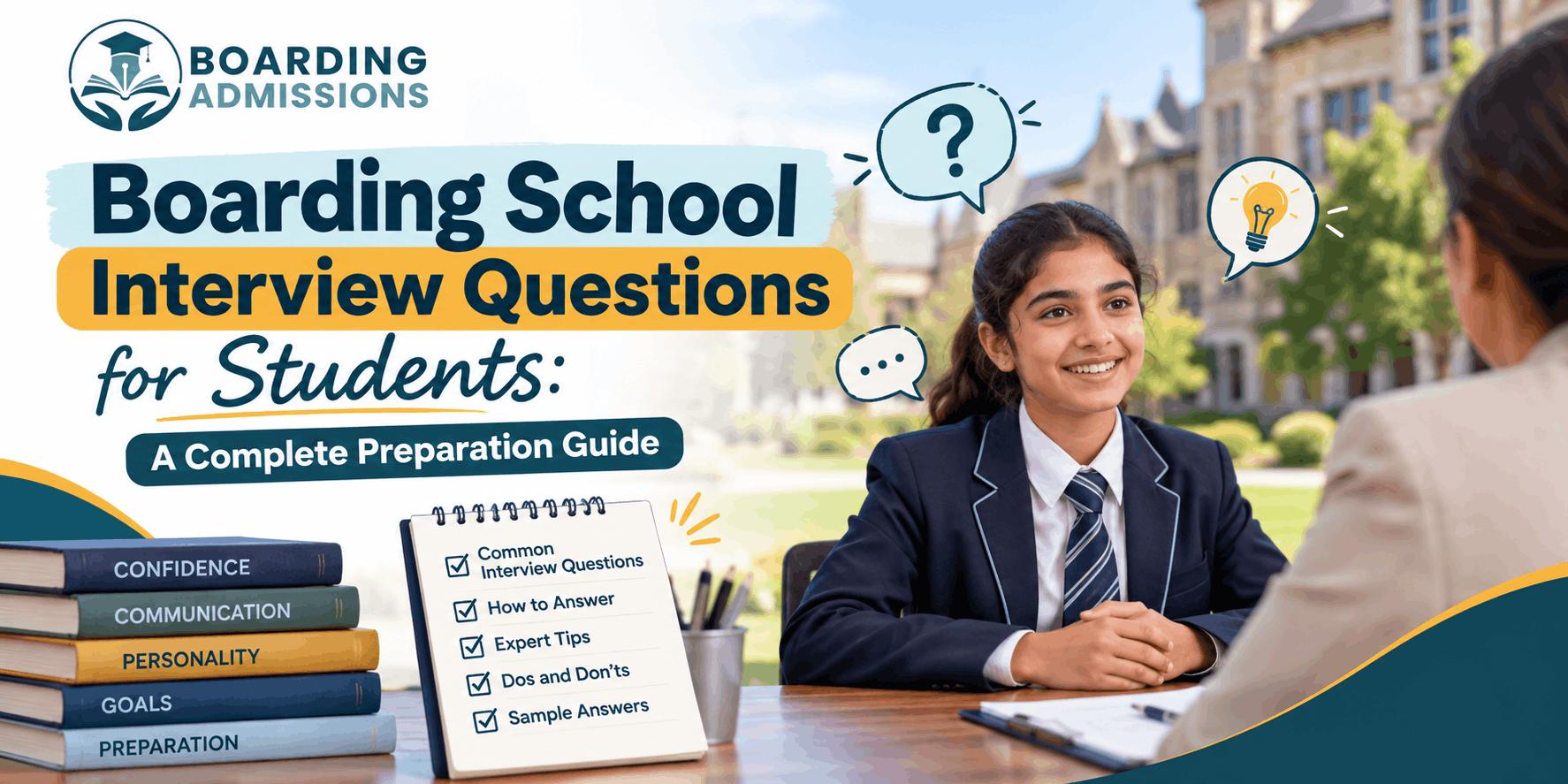


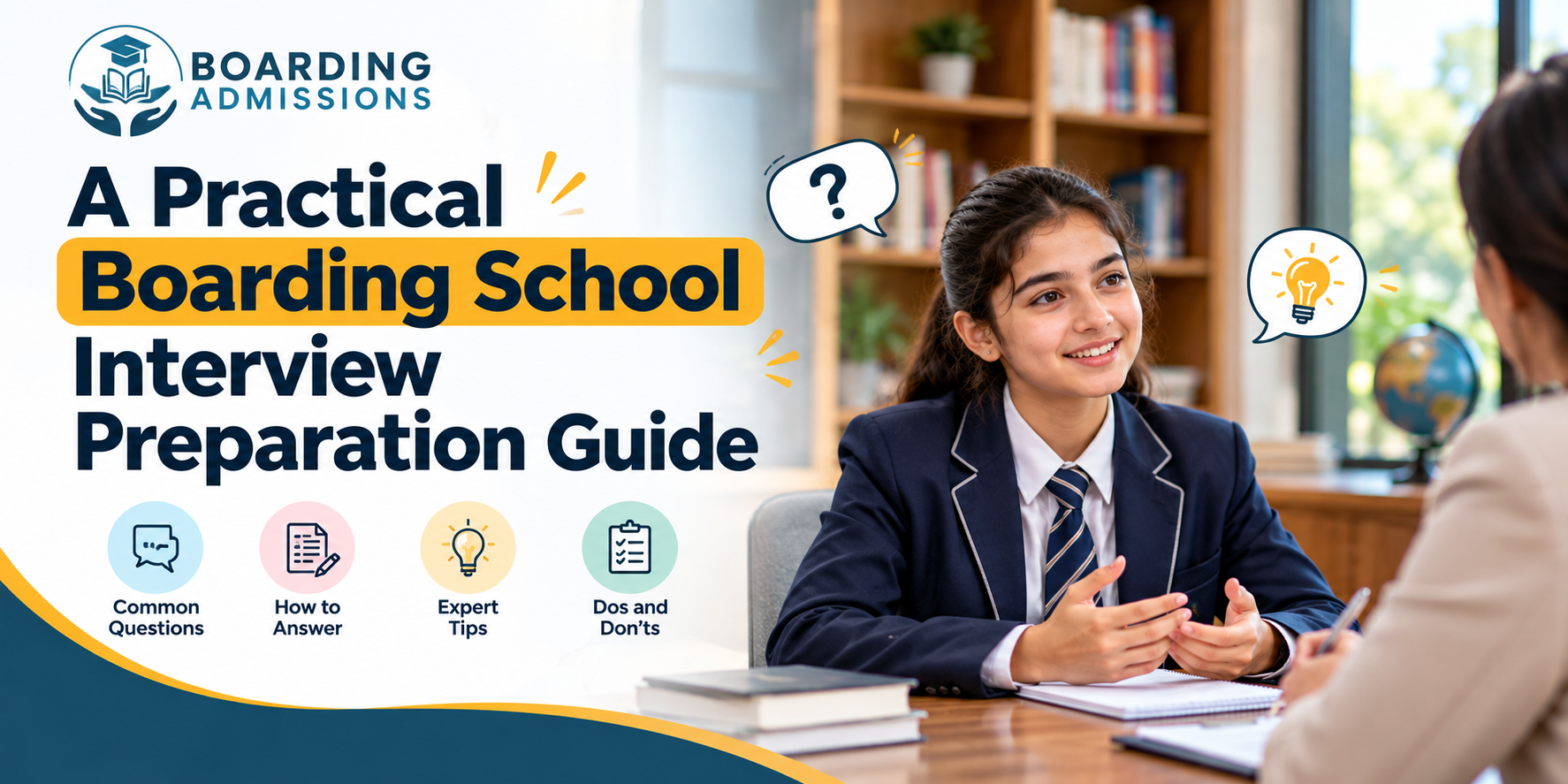
Getting admission to a reputed boarding school involves more than completing an application form or performing well in an entrance examination. Many schools also conduct an interview to understand a student’s personality, communication skills, interests, confidence, and readiness for residential life. Effective boarding school interview preparation helps students understand what to expect and communicate their thoughts more clearly.
For parents, the interview is an opportunity to understand the school’s expectations and help their child prepare without unnecessary pressure. Although every school follows its own admission process, students can prepare for common questions about their academic interests, hobbies, strengths, goals, and reasons for choosing a boarding school.
In this guide, we explain how students can prepare for an admission interview, explore common school interview questions for students, and learn practical ways to answer boarding school interview questions with confidence.
Why Is Boarding School Interview Preparation Important?
A boarding school provides an academic and residential environment where students learn, participate in activities, and develop relationships with their peers. Admissions teams may therefore want to understand whether a student is prepared for the responsibilities associated with boarding life.
A well-planned boarding school interview preparation strategy can help students:
- Express themselves clearly and confidently.
- Explain their academic interests and hobbies.
- Understand the expectations of residential education.
- Discuss their strengths and areas for improvement.
- Prepare for questions about teamwork and responsibility.
- Become familiar with the admission interview format.
Preparation should not involve memorising perfect answers. The objective is to help students communicate naturally and honestly during the interview.
How to Prepare for a Boarding School Interview
Students can follow a few practical steps to make their interview preparation more effective.
1. Research the Boarding School
Before the interview, students should learn about the school they are applying to. They can explore its academic curriculum, extracurricular programmes, sports facilities, residential arrangements, and educational approach.
Understanding the school’s offerings helps students explain why they are interested in joining it.
For example, a student interested in sports might discuss a particular sporting opportunity, while another student may be interested in the school’s science programme, music facilities, or leadership activities.
Avoid giving generic answers that could apply to every school. A specific and genuine reason makes the response more meaningful.
2. Practise Common School Interview Questions for Students
Reviewing common school interview questions for students can help applicants organise their thoughts before the actual interview.
Students should practise questions about their personality, academic interests, hobbies, achievements, and expectations from school life.
Useful questions include:
- Tell us about yourself.
- What is your favourite subject, and why?
- What are your hobbies and interests?
- Why do you want to join this boarding school?
- What are your strengths?
- What would you like to improve?
- How do you handle challenges?
- What do you enjoy doing outside the classroom?
Students should practise answering aloud rather than writing and memorising every response. This helps them become more comfortable expressing their thoughts in their own words.
3. Understand the Admission Process
Boarding school interview preparation should be part of a broader admission strategy. Some schools conduct interviews alongside entrance examinations, while others may consider academic records, application forms, or additional assessments.
Parents should confirm the school’s specific requirements, including the interview format, required documents, eligibility criteria, and application deadlines.
Being familiar with the process helps families plan their preparation and avoid last-minute confusion.
4. Practise Communication and Body Language
Clear communication is an important part of an interview. Students should speak at a comfortable pace, listen carefully, and answer questions directly.
During practice, encourage students to:
- Maintain appropriate eye contact.
- Sit comfortably and attentively.
- Speak clearly.
- Listen to the complete question.
- Ask for clarification when necessary.
- Avoid rushing through answers.
Students do not need to use complicated vocabulary or speak like adults. Interviewers should be able to understand their genuine thoughts and interests.
Common Boarding School Interview Questions and How to Answer Them
Understanding common boarding school interview questions helps students prepare for the main themes that may arise during an admission interaction.
1. Tell Us About Yourself
This question is often used to begin an interview.
Students can briefly introduce themselves by mentioning their current school, favourite subjects, hobbies, and interests.
Preparation tip: Keep the answer relevant and concise. There is no need to describe every personal detail.
2. Why Do You Want to Join a Boarding School?
The interviewer may want to understand the student’s expectations about residential education.
Students can talk about their interest in the school’s academic programmes, sports, extracurricular activities, or opportunities to develop independence.
Preparation tip: Encourage students to give an honest answer rather than repeating something they have memorised from their parents.
3. Why Have You Chosen This School?
This question helps the interviewer understand whether the student has researched the institution.
Students can mention a specific programme, activity, teaching approach, or other feature that interests them.
Preparation tip: Learn a few accurate facts about the school before the interview and connect them to genuine interests.
4. What Are Your Strengths and Weaknesses?
Students may be asked to discuss their strengths and an area they would like to improve.
They might mention qualities such as curiosity, teamwork, organisation, creativity, or responsibility. For improvement areas, they can explain a skill they are actively developing, such as time management or public speaking.
Preparation tip: Use simple examples instead of making exaggerated claims.
5. How Would You Handle Living Away From Home?
This question can be especially relevant to boarding school admission.
Students should answer honestly about their feelings and explain how they might adapt to a new routine, manage their belongings, and seek help when needed.
Preparation tip: It is acceptable to feel both excited and nervous about a new experience. Students do not need to pretend they have no concerns.
6. How Do You Handle Challenges or Disagreements?
Students can describe a genuine situation from school, sports, or another activity and explain how they responded.
Preparation tip: Explain the situation, the action taken, and what was learned. This gives the interviewer a clearer picture of the student’s approach to problem-solving.
Tips for Answering School Interview Questions for Students
Knowing the questions is only one part of effective preparation. Students should also understand how to respond thoughtfully.
Be Honest and Authentic
Interviewers want to understand the applicant as an individual. Students should avoid inventing achievements, interests, or experiences simply to impress the interviewer.
Keep Answers Relevant
A good answer directly addresses the question. Students can add a brief example where appropriate, but they do not need to give a long speech.
Practise Without Memorising
Practising school interview questions for students helps applicants become familiar with different topics. However, memorised scripts can sound unnatural and make it difficult to respond to follow-up questions.
Instead, students should understand the main points they want to communicate.
Ask for Clarification When Needed
If a question is unclear, students can politely ask the interviewer to repeat or explain it. Taking a moment to think before answering is also acceptable.
Prepare a Few Questions of Your Own
If the interviewer invites questions, students can ask about activities, clubs, academic programmes, or residential life.
This can help them understand whether the school matches their interests and expectations.
How Parents Can Support Boarding School Interview Preparation
Parents can help children prepare by creating a supportive environment at home. The aim should be to build familiarity and confidence rather than increase pressure.
Practical ways to help include:
- Conducting short mock interviews.
- Discussing the school’s academic and extracurricular opportunities.
- Encouraging children to talk about their interests.
- Helping them understand boarding school routines.
- Reviewing interview logistics and documents.
- Allowing sufficient time for rest and recreation.
Parents should let children answer questions independently during practice. Constantly correcting every response may make students more anxious about making mistakes.
If the school conducts a parent interaction, parents should also be ready to discuss their child’s educational needs, expectations, and reasons for considering residential education.
Boarding School Interview Preparation Checklist
Use this checklist before the interview:
-
Research the school and its programmes.
-
Confirm the interview date, time, and format.
-
Review the admission requirements.
-
Practise common boarding school interview questions.
-
Prepare examples from academic and extracurricular experiences.
-
Think about strengths, interests, and areas for improvement.
-
Practise speaking clearly and listening carefully.
-
Prepare any required documents.
-
Choose appropriate, comfortable clothing.
-
Get adequate rest before the interview.
-
Arrive or log in on time.
Following this checklist can make the interview process more organised and less unfamiliar.
Conclusion
Effective boarding school interview preparation helps students understand the admission process, organise their thoughts, and communicate their interests with greater confidence. By practising common boarding school interview questions and reviewing relevant school interview questions for students, applicants can become more familiar with the topics they may encounter.
Parents can support this process by researching the school, arranging informal practice sessions, and encouraging honest communication without creating unnecessary pressure.
Every school has its own admission requirements, so families should confirm the specific process before preparing. With a practical approach, students can enter the interview better informed and ready to explain why they are interested in the school.
For more guidance, explore the relevant school profiles, entrance exam preparation resources, and admission guidance available through Boarding Admissions.
Frequently Asked Questions
Q1: How can I prepare for a boarding school interview?
Ans: Begin by researching the school, reviewing its admission requirements, and practising common questions about your interests, academic goals, strengths, and reasons for applying. Focus on clear and honest answers rather than memorising scripts.
Q2: What are the most common boarding school interview questions?
Ans: Common questions include “Tell us about yourself,” “Why do you want to join this school?”, “What are your hobbies?”, and “How would you handle living away from home?” The exact questions vary by school and age group.
Q3: How many school interview questions for students should I practise?
Ans: Students can begin with 10–20 common questions covering personal interests, academics, teamwork, problem-solving, and boarding life. The quality of practice matters more than memorising a large number of answers.
Q4: Do all boarding schools conduct interviews?
Ans: No. Admission procedures vary. Some schools conduct student interviews, while others may focus on entrance examinations, academic records, or other assessments. Parents should check the requirements of each school.
Q5: What should students avoid during a boarding school interview?
Ans: Students should avoid memorising complete scripts, interrupting the interviewer, exaggerating achievements, or pretending to have interests they do not genuinely hold. Listening carefully and answering honestly are more useful.