


How Competitive Are Boarding School?
Boarding schools have long been associated with strong academics, discipline, and holistic development. Across India, many families consider them a valuable option for shaping a student’s future. However, one common question among parents and students is how difficult it is to secure admission in these institutions.
The truth is that admissions can be quite competitive, particularly in well-known residential schools with strong academic reputations and limited seats. Understanding how the process works, what schools look for, and how applicants can prepare makes the journey much clearer.
This article explores the competitiveness of boarding school admissions in India, the factors that influence selection, the types of institutions available, and the challenges families often encounter.
Understanding Boarding School Admissions in India

Residential schools in India offer a learning environment where students live on campus while pursuing their education. These schools typically focus on academics, character development, leadership skills, and extracurricular activities.
Because of the comprehensive education they provide, many parents apply every year for a limited number of seats. This demand naturally increases competition, especially in schools known for strong academic results or international exposure.
Admissions usually involve several stages, including application submission, entrance tests, interviews, and document verification.
Why Boarding School Admissions Are Competitive

Several factors contribute to the competitive nature of admissions.
Limited Seats and High Demand
Many prestigious boarding schools maintain a small student intake each year. While thousands of students apply, only a limited number can be selected.
Strong Academic Expectations
Schools often look for students who demonstrate academic readiness and the ability to adapt to a structured residential environment.
Holistic Evaluation
Apart from academic performance, institutions evaluate extracurricular interests, communication skills, and personal qualities such as independence and curiosity.
Reputation of Top Institutions
Well-established schools attract applicants from across the country and even internationally, making the admission pool larger and more diverse.
These factors together make the selection process selective but structured.
Types of Boarding Schools in India
Boarding schools vary in their curriculum, facilities, and admission criteria. Understanding these categories helps families identify the right fit.
| Type of Boarding School | Key Features |
|---|---|
| Traditional Residential Schools | Focus on discipline, academics, and character building |
| International Boarding Schools | Offer global curricula and multicultural environments |
| Co-educational Boarding Schools | Educate boys and girls together |
| Single-Gender Boarding Schools | Designed specifically for either boys or girls |
| Specialized Boarding Schools | Emphasize sports, arts, or leadership development |
Each type follows its own admission guidelines, but the overall process remains similar.
The Admission Process Step by Step

The journey toward admission generally follows a structured path.
Application Submission
Parents begin by filling out an application form, either online or offline, along with required documents such as academic records and identification.
Entrance Examination
Many schools conduct entrance tests to assess a student’s academic level in subjects such as mathematics, English, and reasoning.
Personal Interview
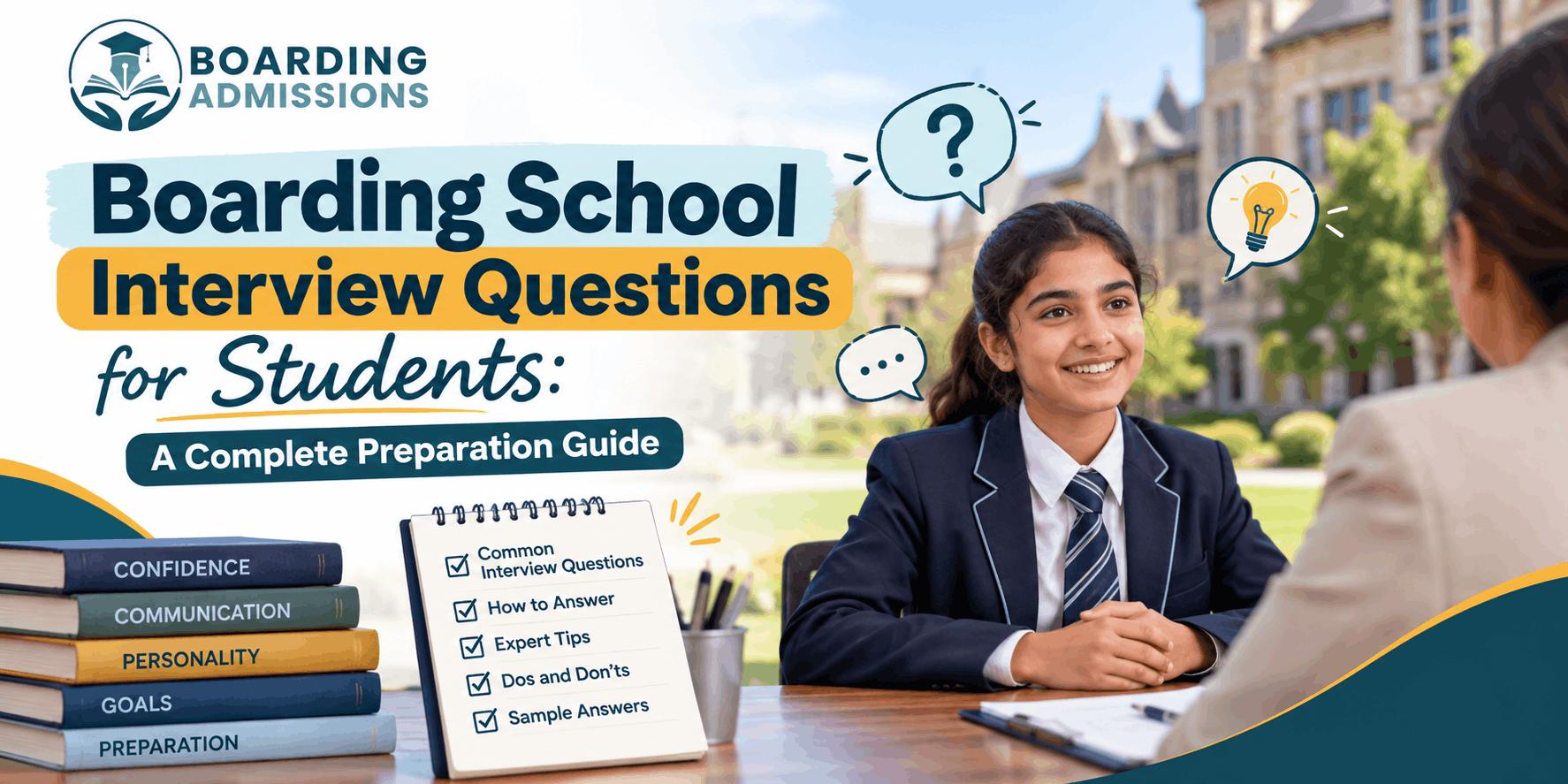
Shortlisted candidates may be invited for an interview. This helps the school understand the student’s personality, interests, and readiness for residential life.
Final Selection
After evaluating all components, schools finalize the list of selected students based on overall performance and available seats.
This process helps institutions ensure that students who join are prepared for the academic and residential experience.
Key Factors Schools Consider During Selection

Admission committees review multiple aspects when evaluating applicants.
Academic Performance
Previous school results provide insight into a student’s learning ability and academic consistency.
Adaptability and Independence
Since students live away from home, schools prefer applicants who show emotional readiness and independence.
Extracurricular Interests
Participation in sports, music, arts, or other activities often strengthens an application.
Communication Skills
Interviews often reveal how confidently students express themselves and interact with others.
Together, these elements create a balanced evaluation of each candidate.
Benefits of Attending a Boarding School

Despite the competitive entry process, many families pursue boarding education because of its advantages.
Structured Learning Environment
Students follow a well-organized daily schedule that balances academics and extracurricular activities.
Holistic Development
Residential schools often focus on building leadership, teamwork, and time management skills.
Exposure to Diverse Perspectives
Students interact with peers from different regions and backgrounds, encouraging cultural understanding.
Independence and Responsibility
Living away from home helps students develop self-discipline and confidence.
These benefits explain why many parents consider boarding education a long-term investment in their child’s growth.
Challenges Families May Face

While boarding schools offer many opportunities, the admission process can present certain challenges.
Intense Competition
Popular schools may receive several times more applications than available seats.
Preparation for Entrance Tests
Students may need time and guidance to prepare for admission exams.
Emotional Adjustment
Some students initially find it difficult to adapt to living away from home.
Financial Considerations
Boarding school fees often include tuition, accommodation, and activities, which can be higher than day schools.
Understanding these challenges helps families prepare better before applying.
Tips to Strengthen a Boarding School Application
Parents and students can take several steps to improve their chances during the selection process.
Start research early to identify schools that match the student’s interests and strengths.
Focus on academic preparation for entrance tests and interviews.
Encourage participation in extracurricular activities to build a well-rounded profile.
Prepare students emotionally for residential life and independence.
Ensure accurate documentation and timely application submission.
When approached thoughtfully, the admission journey becomes more manageable.
The Role of Competition in Improving Education

Competition in school admissions is not always negative. In many cases, it encourages institutions to maintain high standards and motivates students to develop stronger academic and personal skills.
Families exploring opportunities in boarding admission often find that the process encourages students to prepare for new academic and social challenges.
Ultimately, competition can help both schools and students strive for excellence.
How Competitive Are Boarding School: Conclusion
Boarding school admissions in India can indeed be competitive, especially in well-known institutions with strong academic reputations. Limited seats, high demand, and comprehensive evaluation processes contribute to this competitiveness.
However, understanding how the admission system works helps families approach it with clarity and confidence. By preparing academically, developing extracurricular interests, and selecting schools that align with a student’s strengths, applicants can navigate the process more effectively.
Boarding education continues to attract families seeking a balanced combination of academics, independence, and personal growth. With careful planning and preparation, students can make the most of the opportunities these institutions provide.
FREQUENTLY ASKED QUESTIONS
Q1. Why are boarding school admissions in India competitive?
Ans: Competition arises due to limited seats, strong academic expectations, and high demand for well-known residential schools.
Q2. At what age can students apply to boarding schools in India?
Ans: Most boarding schools accept students from middle school levels onward, typically around classes 4–6 depending on the institution.
Q3. Do all boarding schools conduct entrance exams?
Ans: Many schools use entrance tests to assess academic readiness, though the format and difficulty vary by institution.
Q4. What qualities do boarding schools look for in applicants?
Ans: Schools usually evaluate academic performance, extracurricular interests, independence, and communication skills.
Q5. How can parents prepare their child for boarding school admission?
Ans: Preparation may include academic practice, interview readiness, participation in activities, and discussions about adapting to residential life.