




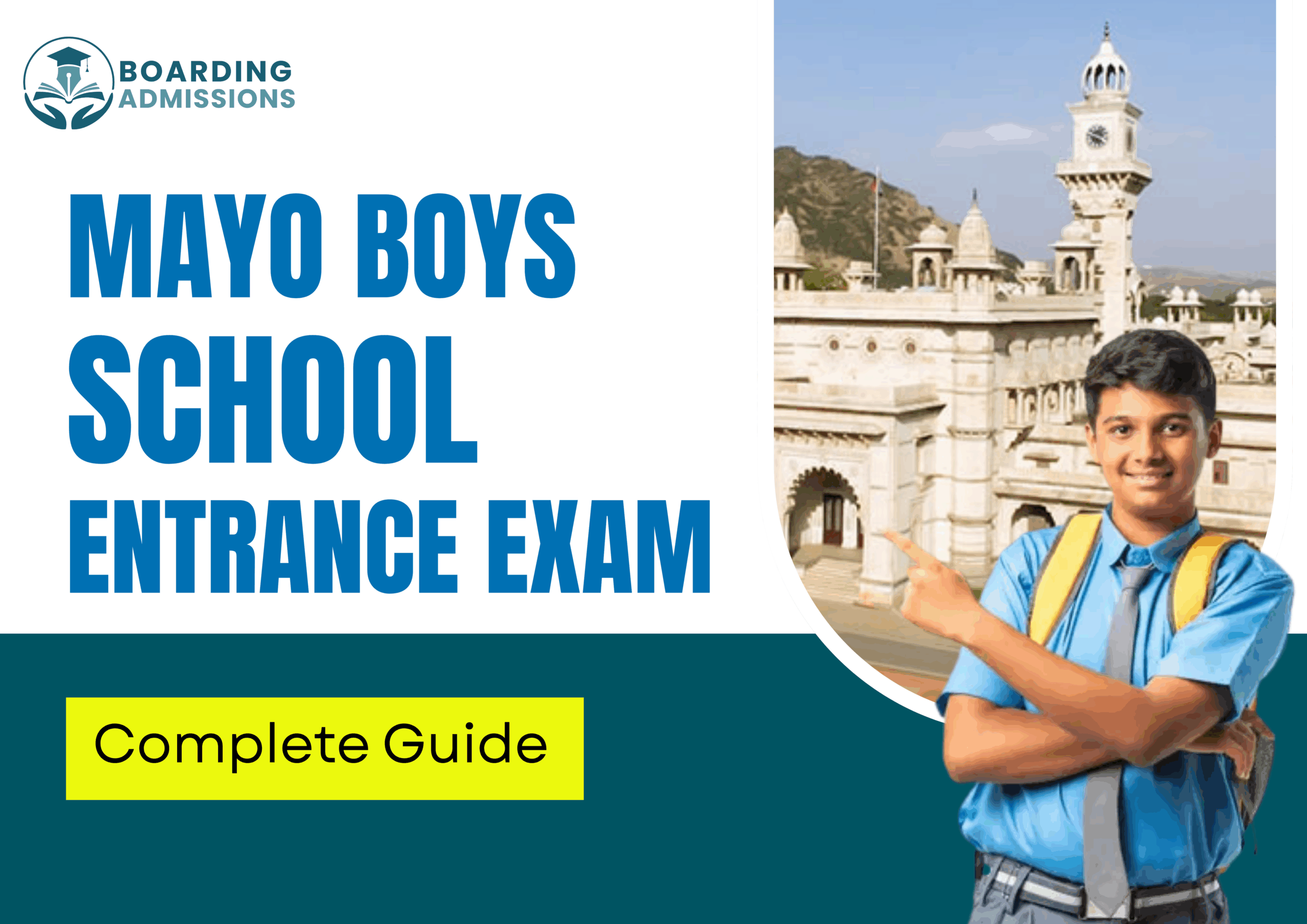
Mayo College, one of India’s most prestigious all-boys residential schools, conducts its Mayo Boys School Entrance Exam each year to select exceptional young minds for admission to Classes IV to IX and XI.
Founded in 1875, the institution has a rich legacy of academic excellence and character development.
When is the Mayo Boys School Entrance Exam Held?

The Mayo Boys School Entrance Exam is officially known as the Common Aptitude Analysis (CAA) and is held every year on the 3rd Saturday of September.
Students must register in advance, and the last date to apply is 31st August. It’s crucial to keep an eye on deadlines as only registered and eligible students can sit for the exam.
Format and Subjects for Exam:
The entrance exam is conducted online and follows a Multiple Choice Question (MCQ) format. The assessment is designed to evaluate a student’s age-specific aptitude in the following subjects:
- English
- Hindi
- Mathematics
This structure ensures that students are tested holistically across linguistic and numerical capabilities.
Also Checkout: Mayo Boys School | Admission Process
Online and Offline Interaction Rounds in Entrance Exam:

After the online written test, an online faculty interaction is conducted where shortlisted candidates participate in group discussions with subject teachers. This is a key step in evaluating communication skills, critical thinking, and attitude.
Following the online session, a final offline interaction is scheduled. This is conducted with members of the Education Committee, including the Principal of Mayo College. For students residing abroad, the school also allows online interviews upon prior approval.
Admission Criteria:
Admissions are strictly based on cumulative performance in the Common Aptitude Analysis and both interaction rounds. Selected candidates are notified via official offer letters, and the new academic session begins in the first week of April.
Required Documents and Eligibility:

Students applying for the Mayo Boys School Entrance Exam must provide:
- A valid Transfer Certificate
- Proof of promotion to the applicable class by July
- If the final exam isn’t completed, a provisional promotion certificate may be accepted
Admissions to Class XI:
Limited seats are offered in Class XI. These admissions are granted based on the CBSE Class X results, with a minimum of 90% required. Admission is also subject to merit, subject availability, and vacancy. Interested students must email their board marksheets to admissions@mayocollege.com.
Registration and Fees:
Here’s a quick breakdown of the registration process for the Mayo Boys School Entrance Exam:
- ₹25,000 – Registration Fee
- ₹1,000 – Prospectus and Sample Papers
After registration, applicants receive the required documents by courier. Parents must then send back the completed form along with:
- Self-attested Birth Certificate
- Aadhaar cards of child and parents
- Passport (if applicable)
- Two reference letters
Why Choose Mayo?
Mayo College is known for building not just academic proficiency but leadership, discipline, and all-rounded personalities. Students graduating from Mayo often go on to excel in diverse fields such as civil services, law, business, and sports.
Frequently Asked Questions (FAQs)
Ques 1. What is the mode of the Mayo Boys School Entrance Exam?
Ans. It is conducted online in the format of Multiple Choice Questions (MCQs).
Ques 2. Who is eligible to appear for the Mayo Boys School Entrance Exam?
Ans. Students from Classes III to VIII and Class X (for XI admissions), who have been promoted, are eligible.
Ques 3. Is there any interview or interaction after the test?
Ans. Yes, shortlisted students undergo both online faculty interaction and offline interaction with the admissions committee.
Ques 4. What documents are required at the time of registration
Ans. Documents include a Birth Certificate, Aadhaar Card, passport (if available), and two reference letters.
Ques 5. Is there a separate syllabus for the Mayo Boys School Entrance Exam?
Ans. No official syllabus is provided, but questions are based on the standard curriculum for each class.